
Quick answer
Dual pricing vs surcharge comes down to how you present card acceptance costs to the customer. Dual pricing shows two prices upfront, a cash price and a card price, so the customer chooses before paying. Surcharging keeps one posted price and adds a fee only when a credit card is used, and it answers to tighter state laws and card network rules.
What you should know before you start
Is dual pricing legal in every state?
- Yes. Federal law lets merchants offer a lower price for cash, check, or debit, as long as the card price is the posted price customers see first.
- No state currently bans a properly displayed dual pricing program.
- Sloppy signage, not the model itself, is where most merchants run into trouble.
Is credit card surcharging legal where I do business?
- Surcharging is allowed in most states as of 2026, but a small group of states ban it outright and a few more add extra rules.
- Legal status has shifted through court rulings in several states over the past few years, so last year’s answer may not hold today.
- Confirm your state’s current rule with your processor or an attorney before you turn on a surcharge.
Can either program put my merchant account at risk?
- Not on its own. The risk comes from getting the mechanics wrong.
- Surcharging a debit or prepaid card, skipping the required advance notice to the card networks, or launching without proper signage can all trigger a card brand penalty.
- A properly built program under either model is a normal, accepted business practice.
Do I need new hardware or software?
- Most modern point of sale systems and payment gateways support dual pricing or surcharge calculation, but older terminals may not.
- Confirm your POS and gateway can display both prices, or calculate and disclose a surcharge automatically, before you commit to either model.
What happens if I set it up wrong?
- Card brand penalties, forced refunds, and closer monitoring of your account are all possible outcomes.
- In states that ban surcharging, getting it wrong can also invite a consumer protection claim.
- Ask your payment processor for a compliance review before launch instead of finding out the hard way.
Card processing costs cut into margins on every sale, and the dual pricing vs surcharge decision determines who ends up covering that cost, you or your customer. Both models let you offset processing fees without quietly raising your prices across the board, but they work differently at the register and answer to different rules. This guide breaks down how each model works, what the card networks and states require, and how customers tend to respond to each one.
In this guide:
- What is dual pricing?
- What is a credit card surcharge?
- Dual pricing vs surcharge: the key differences
- Card brand and state surcharge rules merchants must follow
- How dual pricing programs work at the register
- Cash discount vs dual pricing: are they the same thing?
- How each pricing model shapes customer behavior
- Choosing the right credit card processing model for your business
What is dual pricing?

Dual pricing means posting two prices for the same item everywhere a customer sees a price, a cash price and a card price. The card price becomes your advertised, regular price. The cash price is a discount off that price for customers who pay with cash, check, or in many programs, debit.
This setup is often called a cash discount program, and many processors market it as zero cost credit card processing. Federal law has protected a merchant’s ability to offer a discount for paying cash for decades. The card price typically runs 1.5% to 3.5% higher than the cash price, enough to cover most or all of a merchant’s card processing costs.
- Menu boards, shelf tags, invoices, and online checkout all show both prices upfront
- The customer chooses a payment method and pays the matching price, with no fee added after the fact
- No state currently bans a properly displayed dual pricing program
- Many programs extend the discount to debit card payments as well as cash, since it applies broadly rather than targeting one card type
Good to Know: Dual pricing works because you are discounting the card price for cash payers, not adding a fee to a cash price for card payers. That distinction is why it clears state laws that block straightforward surcharging.
What is a credit card surcharge?
A credit card surcharge is an additional fee added at checkout only when a customer pays with a credit card. The posted price stays the same for every customer, then the surcharge shows up as a separate line item once someone chooses to pay by card.
Visa caps how much a merchant can add. Per Visa’s official Merchant Surcharging Q&A, a surcharge cannot exceed 3% of the transaction or the merchant’s actual cost of acceptance, whichever is lower, and merchants must notify Visa and their acquirer at least 30 days before the program starts. Mastercard’s published surcharge rules follow a similar notification and disclosure structure for Mastercard-branded credit cards.
- Applies to credit cards only, debit and prepaid cards can never be surcharged under card brand rules
- Must be disclosed on the customer’s receipt and posted at the point of entry and the point of sale
- Must be applied at the same rate across every card brand the merchant accepts
- Banned outright in a handful of states, and restricted in several more
Dual pricing vs surcharge: the key differences
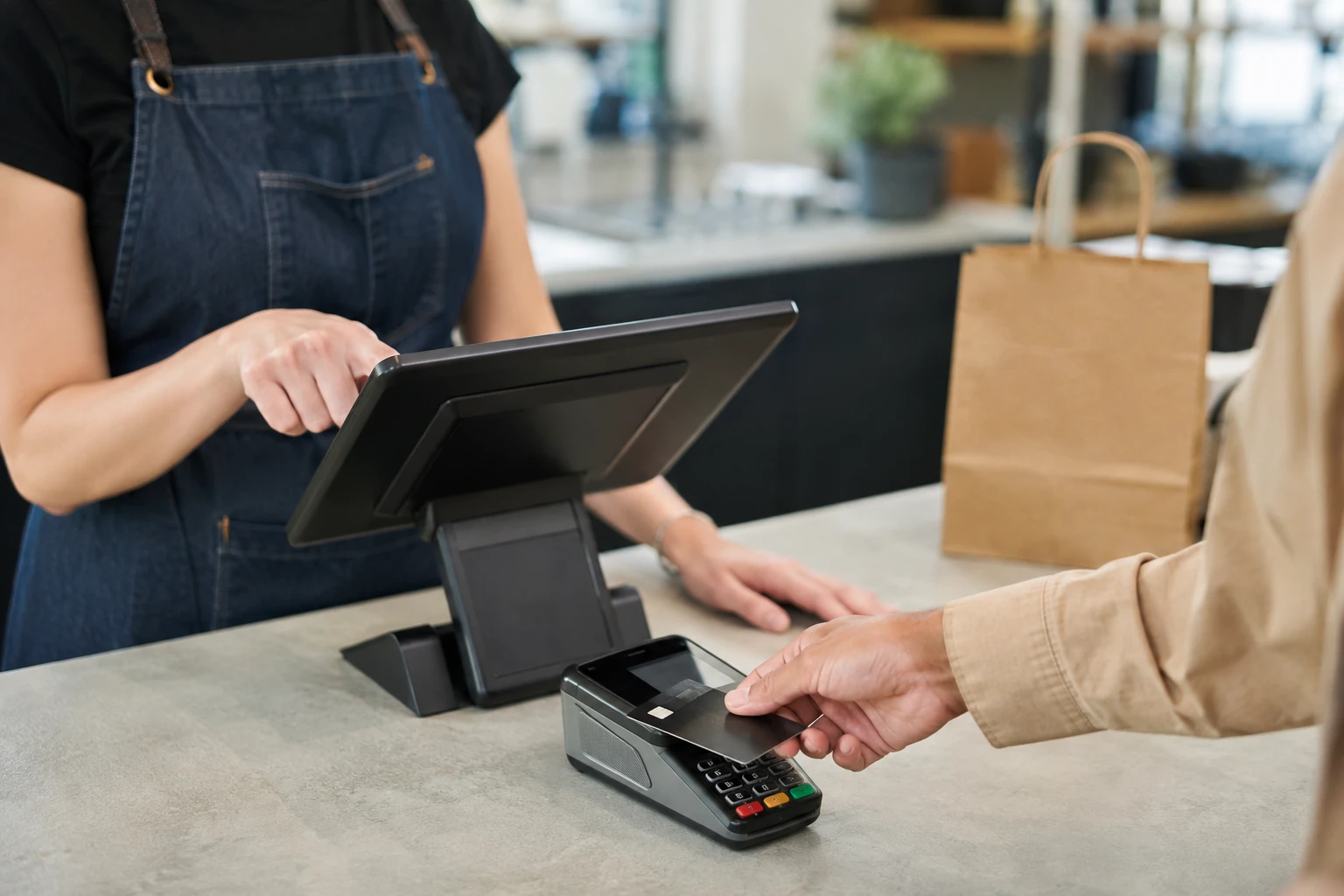
Both models pass card acceptance costs to the customer who chooses to pay by card. The mechanics, the legal footing, and the customer experience differ enough that the choice matters. Surcharging can be quicker to launch since it does not require touching your existing prices, but it comes with more legal exposure than dual pricing carries.
| Factor | Dual pricing | Surcharge |
|---|---|---|
| Legal status | Permitted nationwide when displayed correctly | Banned in a handful of states, restricted in several more |
| How it displays | Two prices shown before payment | One posted price, fee added at checkout |
| Applies to | Credit cards, and in most programs, debit | Credit cards only |
| Network cap | No network-imposed cap on the spread | Capped at your cost of acceptance or 3% for Visa, whichever is lower |
| Advance registration | Not required | Required with card networks, generally 30 days ahead |
Sources: Visa Merchant Surcharging Q&A, Mastercard Surcharge Rules
Card brand and state surcharge rules merchants must follow
Surcharging sits at the intersection of card brand rules and state law, and the two do not always line up cleanly.
Per Visa’s most recently published guidance, Connecticut, Maine, Massachusetts, Oklahoma, and Puerto Rico prohibit surcharging outright, while Colorado, Minnesota, New Jersey, and New York layer extra disclosure or cap requirements on top of standard card brand rules. State law in this area keeps moving. A federal appeals court reaffirmed Puerto Rico’s surcharge ban in 2025 after businesses argued that federal law should override it, and the court noted plainly that federal card network rules govern the networks, not the states.
- Confirm your state’s current status before you launch, not after
- If you operate in multiple states, each location follows its own state’s rule
- Card brand rules apply everywhere on top of state law, so both boxes need to be checked
- A processor that tracks state and network changes on your behalf removes a lot of the guesswork
Watch Out: State surcharge laws keep changing through court rulings and new legislation. What applied in your state last year may not apply today, so confirm current rules before you flip the switch.
How dual pricing programs work at the register

Setting up dual pricing starts with your actual cost of acceptance, not a guess. Most businesses pull several months of processing statements, calculate the blended rate across debit and credit transactions, and use that figure as the spread between the two prices.
Your point of sale system then needs to detect the payment method and apply the matching price automatically, so staff are not doing the math by hand at the register.
- Review recent statements to calculate your true card acceptance cost.
- Set the spread between cash and card prices, most businesses land between 1.5% and 3.5%.
- Update every price point: shelf tags, menus, service quotes, online checkout, and any other pricing displays customers see.
- Confirm your POS or gateway applies the correct price automatically and, where relevant, can print both prices on the customer’s receipt.
- Post clear signage so customers understand the pricing before they reach the register.
Pro Tip: Run a short pilot at one location or during a slower shift before you roll dual pricing out everywhere. It gives your staff time to explain the two prices without a line building up behind a confused customer.
Cash discount vs dual pricing: are they the same thing?
Cash discount and dual pricing describe the same core idea from two angles, and the terms get used interchangeably across the payments industry. A cash discount program frames the lower price as a reward for paying with cash. Dual pricing frames it as two straightforward prices posted side by side.
The underlying mechanics and legal footing stay the same either way. What changes is how you present it to customers, and businesses that lead with two clear prices instead of a single price plus fine print tend to field fewer questions at the counter.
- Both rely on the card price as the posted, regular price
- Both offer a discount for cash, check, or often debit
- A side-by-side dual pricing display tends to draw less pushback than a discount that only shows up in the fine print
How each pricing model shapes customer behavior

Customers respond to these two models differently, even when the math lands close to the same. A surcharge appears late in the transaction, often after a customer has already committed to buying, and a fee that shows up at that point tends to read as a penalty.
Dual pricing shows both numbers before the customer decides how to pay, which frames the lower price as a choice rather than the higher price as a punishment. A 2026 J.D. Power survey reported by Nav found that about a third of small businesses using surcharges see customers occasionally or frequently cancel a purchase once the fee appears. A separate WalletHub survey found that more than three in five consumers think it is unfair for merchants to pass processing fees on to them, and 87% describe the experience as feeling nickel and dimed.
- Dual pricing frames the outcome as a discount for paying cash, which tends to land better with customers
- Surcharges added late in checkout are more likely to cause cart abandonment or an awkward moment at the register
- Clear signage before the point of sale reduces confusion under either model
- Neither model removes customer reaction entirely, so plan for questions either way
Before you launch either program
- ✓ Confirm your state’s current surcharge or dual pricing rules
- ✓ Calculate your real cost of card acceptance from recent statements
- ✓ Update every price point and confirm your POS displays both prices, or the surcharge, correctly
- ✓ Post required signage at entry and at the point of sale
- ✓ Train staff to explain the pricing calmly if a customer asks
Choosing the right credit card processing model for your business
There is no single right answer for every business. The better fit depends on your state, your card mix, your broader pricing strategy, and your customers’ payment preferences. Businesses operating in a surcharge ban state, or businesses with locations across several states, often find dual pricing simpler to manage since it works the same way everywhere.
Businesses that see mostly credit card transactions and operate in a single surcharge-friendly state sometimes prefer surcharging, since it keeps the sticker price untouched and only card-paying customers see the added cost.
- Multi-state or online businesses often lean toward dual pricing for consistency and to help protect profit margins
- Single-location businesses in surcharge-friendly states sometimes prefer a surcharge program
- Either model requires a compatible POS system, staff training, and signage that meets card brand rules
- Talk through both options, and how each affects your customers’ experience, with your payment processor before you commit, since switching later means updating every price point again
Why work with First Card Payments
Picking between dual pricing and surcharging is only half the job. The other half is making sure your merchant account, your processor, and your POS setup all support the model correctly from day one.
First Card Payments has spent more than 20 years working with conventional and high-risk merchants on exactly this kind of setup. Our team holds relationships with more than 30 banks and ISOs, which gives us room to match your business with a partner suited to your card mix, your states, and your risk profile, subject to underwriting.
We walk you through your real cost of card acceptance, help you weigh which pricing model fits your states and card brands, and stay in your corner after approval instead of disappearing once the paperwork clears. With offices in Miami, Florida, and Los Angeles, California, our team offers candid, client-first guidance through underwriting, transparent explanations of fees and tradeoffs, and ongoing support focused on your account’s long-term health.
Call us at 877.441.6801 or apply today to talk through dual pricing, surcharging, or your broader payment processing setup. Applying starts a review with our underwriting partners, not a guaranteed approval.
Related resources
Dual pricing and surcharging are one piece of managing your payment processing costs. A few related resources worth a look:
- If a surcharge or dual pricing program does not fit your risk profile, our High-Risk Merchant Accounts page covers what changes for regulated or higher-chargeback industries.
- Already running ACH or eCheck payments alongside cards? See our ACH Payment Processing page for how those transactions are typically priced.
- Fee questions often start with reading your existing statement. Our breakdown of high-risk merchant account fees and rates and our guide to MTOT DISC merchant account fees can help.
- A new pricing program usually means a POS update too. Our guide on choosing a POS system for small businesses covers what to look for.
- Compliance touches more than pricing. See our tips on avoiding PCI non-compliance fees and our broader high-risk credit card processing tips.
- A new pricing program can also affect disputes if customers push back at the register, so keep your chargeback prevention practices current.
- We maintain dedicated guides for several specialized industries, including adult merchant accounts, CBD merchant accounts, nutraceutical merchant accounts, travel agency merchant accounts, online dating merchant accounts, continuity subscription merchant accounts, debt relief merchant accounts, and credit repair merchant accounts.
- Considering a referral relationship instead? Learn about our Referral Partnerships program.
- A dedicated support line makes pricing questions easier to field. See our Nextiva Business Phone Services page.
- Want the full picture on First Card Payments? Visit About Us, read more about Alexander Ellis, browse the blog, or reach out through Contact Us. Ready to move forward? Apply today or return to our homepage.
Ready to stop guessing on your payment processing costs?
Talk to a payment specialist about whether dual pricing, surcharging, or another model fits your business, subject to underwriting and program terms.
Frequently asked questions
Is dual pricing the same as a credit card surcharge?
No, they work differently at the register even though both help offset card processing costs. Dual pricing shows two prices upfront, a cash price and a card price, and the customer picks. A surcharge keeps one posted price and adds a fee only when a card gets used. The legal rules and disclosure requirements differ between the two as well.
How much can I add through a credit card surcharge?
Visa caps a surcharge at 3% of the transaction or your actual cost of card acceptance, whichever comes out lower, and the surcharge cannot push your total past that limit. Other card networks set their own caps, so check each one you accept. Several states add lower caps or extra disclosure rules on top of that. Confirm your total exposure across every card brand and state before you set a rate.
Can I surcharge debit card transactions?
No. Card brand rules block surcharges on debit and prepaid cards in every state, even if the customer runs the card as credit at the terminal. Dual pricing programs, by contrast, often extend the cash price to debit payments too, since the discount applies broadly rather than targeting one card type. Mixing this up is one of the more common compliance mistakes merchants make.
Do I have to tell customers about a surcharge in advance?
Yes. Card brand rules require signage at the point of entry and the point of sale, plus a disclosure on the receipt whenever a surcharge applies. Some states layer on their own notice requirements. Skipping disclosure is one of the fastest ways to trigger a card network penalty, and clear signage is what keeps customers from feeling surprised at checkout.
Will switching to dual pricing or surcharging upset my customers?
Some pushback is normal with either model, since customers notice when a price changes. Dual pricing tends to generate fewer complaints because customers see both prices before they decide how to pay. A clear explanation from staff and visible signage go a long way toward smoothing the transition either way.
What is the difference between a surcharge and a convenience fee?
A surcharge applies to credit card payments at your normal point of sale. A convenience fee applies to an alternative payment channel you do not normally offer, like a phone or online payment option for a business that usually takes payment in person. The two follow different card brand rules, so confirm which one actually applies to your setup before you launch either.
Can I run dual pricing and a surcharge program at the same time?
Generally, no. Stacking a surcharge on top of a card price that already reflects a cash discount would apply two fee mechanisms to the same transaction, and most processors and card brands treat that as a compliance red flag. Most merchants pick one model and apply it consistently across the business, and a quick compliance check with your processor can confirm what your setup allows.
Which states currently ban surcharging?
Per Visa’s most recently published guidance, Connecticut, Maine, Massachusetts, Oklahoma, and Puerto Rico prohibit surcharging outright. Several other states, including Colorado, Minnesota, New Jersey, and New York, allow it but add extra caps or disclosure rules. These rules shift through legislation and court rulings fairly often, so confirm the current status in every state where you operate before you launch a program.
How do I know which model is right for my business?
It depends on your states, your card mix, and how your customers already prefer to pay, especially if avoiding raising your prices matters to your business. A payment specialist can review your recent statements, your locations, and your risk profile to help you decide between dual pricing vs surcharge for your business instead of guessing.

My interest in the financial world started to blossom in High School. However, my parents tell me I use to watch financial programs before the age of 5. So, I guess I was born with the Financial bug. In high school I was accepted into their Finance Academy, which I attended for 4 years. In addition to graduating high school, I accumulated a substantial amount of financial knowledge few people experience at such a young age. During which time, I won the State of Florida Stock Market Contest and I also finished in the top 100 in the CNBC stock market contest which had over 1 million participants throughout the country (including some of Wall Street’s elites) with a take home prize of $1 million. These achievements allowed me to be invited to many shows and events with top people in their fields of business from around the world.